Look at this, but first, let me tell you why it's wrong.

I already wrote this once. It didn't work out.

I came on the site a couple of days ago to post links to the latest projects I've been working on. I started writing a small introductory paragraph about what the projects were, intending to embed the video and be done with the post. But one paragraph became two, and then twelve, filled with self-righteous explanations of how little time and resources I had and how these projects were created despite great duress and impossible expectations. I suddenly realized I'd been writing for an hour and hadn't come close to saying anything.

This is not unusual for me when discussing my work. If you've been through the Works page of this site, you'll have noted that the projects are offered up with a few paragraphs of explanation, most of which are simply thinly-disguised excuses for the projects' shortcomings. They're full of I only had 24 hours to get it together and I had to figure out how to do it with no budget and with no help and no time to put together a real plan, I set out to try to throw something together. The takeaway is never "listen to this crazy story!", it's "when you consider everything I had against me, this is really the best you could possibly expect."

I've been thinking about this habit for the past few days, wondering why it is I'm simply not capable of just saying "hey, I made this, take a look at it!" It's not a comfortable study to make about yourself. 

Part of the issue is the nature of my job. I churn out about 120 videos a year, which is an large number for a position like mine. I almost never get a chance to do a project where I feel I can make it anywhere near what it could be. It's all a case of what I can get done in a day or two, even for bigger or higher-profiler projects.

Whenever I show someone a video I've finished, I want them to understand that it's not the best project I could do, it's just the best I could come up with on short notice, and look what I managed to do with no resources! I want them to know that I really think I could do this better than I did, if given the chance. I want tempered expectations. 

But quality isn't something that varies according to expectations. If a video I've made is lacking, it's because I didn't make it as well as I could have. That's a fact, regardless of whether I was trying to make it underwater while drunk with a gun to my head.

This makes me sad, because this website is my portfolio, and while there's many projects here that I'm proud of, there's almost nothing that I like without reservations. It's all things that I like and think show my talents, but only when you understand that I think I could've done it better, given the chance.

Someday, I'll learn to let my work stand on its own two feet. Until then, I'll link you to a fascinating interview I did with a Bosnian war refugee called "The World In Our Midst," and a television commercial campaign I did for an outreach ministry our church has.

I think they're both pretty good, considering.

The Social Network

I've always been a  fan of David Fincher and his exacting filmography. And if there's anyone who's completely bought in to Aaron Sorkin's verbose style and intelligent-discourse-is-sexy scripts, it's me. So the idea of the two of them doing a movie together, any movie, is automatically appealing to me. Even the idea of a "Facebook movie."

If you've seen the reviews, you don't need me to tell you that the movie's very, very good, perhaps great. It will garner a Best Picture nomination this spring, Fincher will likely be nominated for Best Director, and Sorkin's an early frontrunner for Best Adapted Screenplay. If you were torn on seeing it, do so. It's worth it.

Interestingly, the things that one would think (or, at least, I would think) should weaken the movie are some of its strongest aspects. The casual viewer might assume that watching someone create a website would be boring, or that the bickering of two college kids creating a web start-up would seem small and petty, but these are some of the strongest parts of the film, simply because the audience inherently knows the stakes of these moments. The small decisions to do something one way and not the other, the slights that slowly fester, the little disputes that that brook separation rather than compromise, all move with the weight of the audience understanding that these seemingly throwaway exchanges changed the course of these character's lives - and, by extension, our lives - in a way they can't remotely comprehend at that moment.

Sorkin noted that he would be just as unhappy as Mark Zuckerberg about the movie (Zuckerberg, Facebook's creator and CEO, has refused involvement in the film and refuted most of its content), since the decisions made at 19 years old would make for an unflattering movie for anyone. I imagine that if someone cobbled together my worst moments from age 19 to 21, you would find a tough character to root for. Especially because these battles are over business decisions made by people who aren't actually in business in any real sense of the word. They're college students. They don't understand how the world works.

I'm now 27, and I now have done enough freelance work to have some understanding of how business is done when the work is hammered out in your living room at 3 in the morning, and all contact is just quick emails and short phone calls. But I made mistakes along the way, and I was mistreated by some of the people who contracted me. These things happen when you're young and unfamiliar with business protocol.

A huge part of the film is based on the lawsuit brought by three students who had hired Zuckerberg to build a social networking website for Harvard students. However, Zuckerberg doesn't build this site, instead he builds Facebook and puts it online himself. The students maintain that he'd stolen their idea, whereas Zuckerberg maintains that his idea was different, and better, which is why his idea worked and their site doesn't exist. Sorkin strives to make sure that both points seem valid: Zuckerberg remembers it one way, the students another, and both are convinced their story is the right one.

And isn't that the way things always are? The Social Network has a clearly deliberate Rashomon quality to it. To Zuckerberg, his idea is different from the one proposed to him, because that proposal made him think "well, then, why not this?" Because his mind works ten steps ahead of most people, he misses the fact that there's a logical progression between the idea proposed to him and the site he created, and that progression means something in the business world. It's the same as a bright high school student who finds himself capable of leaping to the answer in his algebra work without working through the steps given to him in the textbook: since he didn't seem to need the steps, he doesn't realize the steps exist whether or not he's cognizant of using them.

All these mistakes and hurt feelings mean so much more because the end result is a multi-billion dollar business, one that everyone feels they have a stake in. But the weakness of the film is that in some ways, it doesn't recognize that in order to buy the emotional investment of the characters, we need to be convinced that their battles are real. The truth matters.

You would think that it wouldn't, since it's just a movie. Both Fincher and Sorkin have admitted to changing details, imagining conversations, combining multiple encounters into one more dramatic one. Sorkin even pushed to deliberately try to make things more fictional than necessary sometime, with the argument that sometime reality isn't the best choice for a story. There's a scene early in the film where Zuckerberg, the night after a bad breakup, builds a website for comparing Harvard girls against each other. In the scene, and in real life, he drinks several bottles of Beck's, but Sorkin wanted him to make a screwdriver in the film, so that it's clear that he set out to get drunk. And there's nothing wrong with that, right? People understand that this movie version of the story, not the real version.

Except that what keeps this story gripping is its ties to real life. There's only so much an audience can care when a movie character gets cheated out of a billion dollars. But if you can say "this is the story of how Eduardo, a real person and the co-founder of a website you use every day, got cheated out a billion dollars back in 2005," then all of a sudden the financial details, the small decisions carry the weight of us understanding that this guy missed out on not just a lot of money, but on Facebook, the behemoth that controls our online consciousness. That's the only reason we can get involved in this story at all.

I think, in a few years, our appreciation of the movie will fade. We'll remember that it takes place mostly in deposition hearings, we'll recognize the unlikabilty of the Zuckerberg character, and most importantly, we'll forget how important Facebook was in our lives. It'll become MySpace, Friendster, and AIM; Homestar Runner and HotOrNot.com. Something we used to do, someplace we used to spend all our time. The movie will seem dated, and maybe even a little silly. Imagine a website about the founding of any one of those sites. Who would care? Who can even remember?

But as a movie about now, as a movie primed to tap into the zeitgeist, it's damn near perfect. Get out and see it.
More Lists: Most/Least Likable Actresses

Doing the list of most likable/unlikable actors ended up being so fun that I did an actresses version. The actresses' version turned out to be easier - there are more actresses who are well-known for being hard to root for, and more who are famous for being charming and relatable regardless of role. It only took a few minutes to put these two lists together.


10. Jayma Mays
 

 9. Alison Brie

8. Felicia Day 


7. Anne Hathaway

6. Amy Adams

5. Sandra Bullock

4. Reese Witherspoon

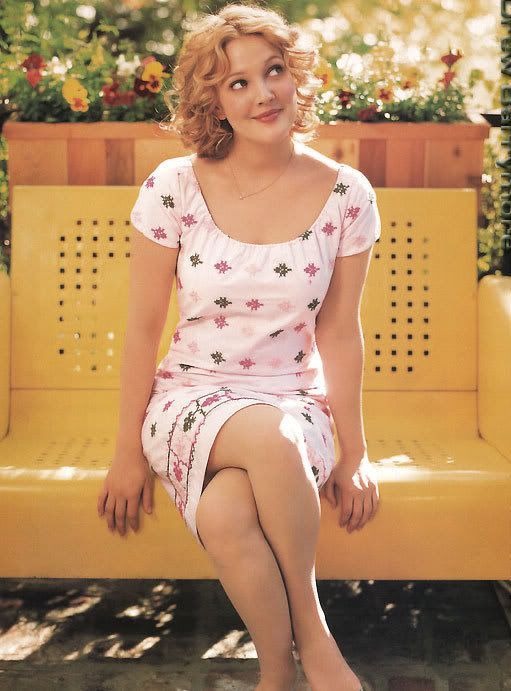
3. Drew Barrymore

2. Jennifer Garner

1. Rachel McAdams

 And, on the flip side, here are the 10 least likable actresses.

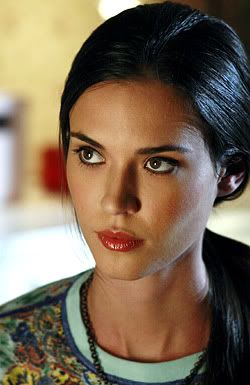
10. Odette Yustman

9. Madonna

8. Megan Fox

7. Michelle Pfeiffer

6. Sarah Jessica Parker

5. Nicole Kidman

4. Selma Blair

3. Anne Heche

2. Tori Spelling

1. Sharon Stone

More Lists: Most/Least Likable Actors

I was trying to quantify likability recently.

I thought it'd be fun to make a list of 'Most Likable Actors,' based purely on their perceived likability from watching their movies. But then I realized that the problem is that what I know about the actors personally from press tours and Hollywood gossip would color my selections. Some actors seem nice in movies but are also famously nice in person (Tom Hanks, for example), while others have been run down so thoroughly by the press that it's impossible to buy them as a nice person in movies anymore (Katherine Heigl, Megan Fox, etc.). I had to tryto mentally separate that out, which is harder than it looks. Here's the tack I took:

Pretend for a moment you are not a resident of Earth. You have never watched television, surfed the internet, or read a single newspaper (yeah, yeah, I get it, nobody on Earth reads newspapers either). You arrive in your spaceship and steal every movie and TV show ever made. While watching these movies and shows back in your cushy spaceship movie room, you determine you'd like to meet and hang out with some of the actors, the ones who seem nicest based solely of their performances. After all, some people seem likable even in unlikable roles, whereas others can't seem likable even when rescuing puppies from hot lava. If I were that alien, hanging around in my spaceship, here's the list I would come up with:

10. Ryan Reynolds

9. Nathan Fillion

8. Michael J. Fox

7. Neil Patrick Harris

6. Zachary Levi

5. Jorge Garcia

4. Jackie Chan

3. John Krasinski

2. Will Smith

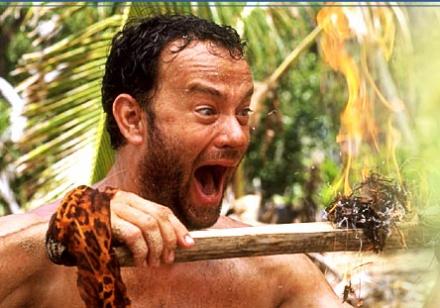
1. Tom Hanks


For fun, I tried to think about the reverse. Here's the group the aliens would most likely try to kill.

10. Chris Cooper

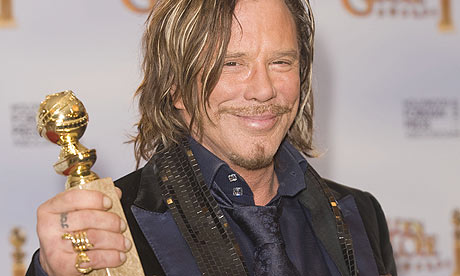
9. Mickey Rourke

8. Jack Nicholson

7. Ray Liotta

6. Sean Penn

5. Jesse Bradford

4. Christian Bale

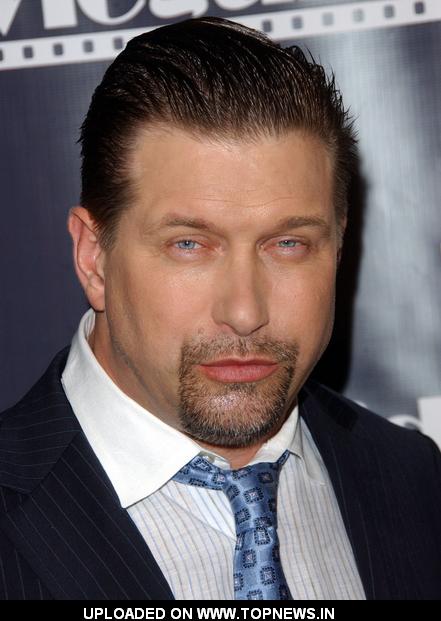
3. Steven Baldwin

2. Dane Cook

1. Matthew Lilliard

More Lists: Gay Writers

It turns out lists are fun! More lists!

Favorite Gay Writers
Since I did a list of favorite gay musicians, I decided I wanted to also do a list of favorite gay writers. This turned out to be tricky, since it's obviously hard to identify who's gay and who isn't when a writer's been dead for several generations and didn't see fit to leave a definitive statement on his or her sexuality somewhere in their will. And that's without considering that the practical definition of what's considered homosexual has varied throughout history. So, instead:

Favorite Gay Writers,
Based Entirely Upon Heresay And Internet Speculation

5. Walt Whitman
Impassioned and bold, it's moving even if you hate poetry. I remember stumbling on it in middle school and being shocked by it. "They're having us read this? This is... filthy! Awesome!" This was also during a stretch where I was memorizing synonyms from the thesaurus for "fat" and "ugly" in order to more esoterically insult people. I was not a fun middle schooler to spend time with.
Read: Leaves of Grass


4. Hans Christian Andersen
Have you ever read 'The Little Mermaid'? The Little Mermaid is given a choice between murder and suicide, and picks suicide. It's amazing. How much would he have hated Disney?
He also wrote 'The Little Match Girl,' 'The Ugly Duckling,' 'The Princess and The Pea,' and 'Thumbelina.' You would be suprised how dark some of those storie actually are.
Read: The Complete Fairy Tales


3. David Sedaris
Capable of finding humor in everything, including his own OCD, he's engaging to read, though it seems like he'd be tough to hang out with in person. He's also a NPR commentator, and reads his work aloud on some of their programs. I particularly recommend listening to "6 to 8 Large Black Men," his piece on Christmas in Holland.  Here's a link.
Read: Me Talk Pretty One Day.


2. Ralph Waldo Emerson
Probably not gay, but seemed to have at least some sort of major crisis of sexuality during is lifetime. It always bugs me that people prefer Thoreau over Emerson. Thoreau's a more accessible writer, but Emerson was brilliant. It is near-impossible to quote Emerson and not sound like reasonably intelligent.
Read: Essays (First Series)


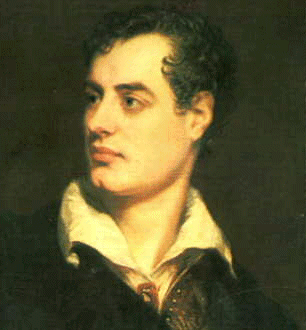
1. Lord Byron
At least these rumors are slightly more founded: Byron's publishers instructed biographers to avoid disclosing his bisexuality. Byron's work is remarkable since it shows tremendous passion and fervor towards it subjects, but we know from Byron's life that he burned hot and cold in all his relationships, destroying the reputation of a number of women, one of whom described him as "mad, bad, and dangerous to know." Somehow, this makes his work more appealing to me. I particularly enjoy "So, we'll go no more a roving."
Read: Selected Poetry


Least Favorite

Herman Melville
Call me tedious.
Read: Moby Dick. If you must.