Those Left Behind: Inspecting the Jilted Best Picture Nominees

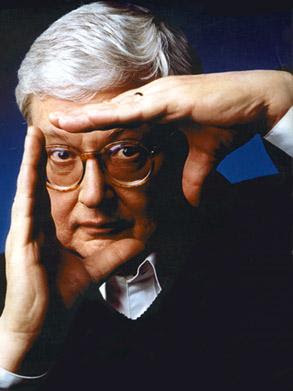
Roger Ebert had a good piece the other day about whether someone can really be “robbed” of an Oscar (I'm glad he's still on his game. He confused Emma Stone and Jessica Chastain in his Oscar post the other day, and I got worried about him). It’s a reward, not a right, based on people’s opinions, so how can any Oscar really be “wrong”?

I agree, up to a point. I think there’s something to be said for a little bit of righteous outrage on behalf of the people and movies left behind. The ignored have a small window to complain about being unjustifiably forgotten, and everyone is very sympathetic during that time – and then a few months pass, everything dies down, and Extremely Loud and Incredibly Close get to have “Best Picture Nominee!” on its DVD cover for all time, and everyone forgets that people thought Young Adult even had a chance.

Sure, sometimes it’s better to be the jilted than the triumphant (anyone who thinks that Pulp Fiction losing to Forrest Gump for Best Picture was bad for that movie’s credibility long-term needs to have their head examined), but for every derided win (Crash, Shakespeare In Love), there’s a hundred more wins where no one even remembers who else was in the competition.

So let’s have a quick moment for those left behind.

Best Picture

We’ve covered these movies before, but let’s cover the half-dozen movies that didn’t snag a nomination that might’ve deserved to:

There were three or four movies that didn’t get nominated where the conventional wisdom is that the films were “too dark” for the Academy.  There’s a case to be made that The Girl With The Dragon Tattoo, Drive, Shame, and Young Adult were all legitimate contenders that never made it out of the gate because they were thematically bleak or had disturbing violence. But I’m not sure I buy the premise. The Academy loves schmaltz, but it also loves being considered cutting-edge. If the studios of any of those films had tried to gather Oscar momentum for them, I don’t think their subject matter would have mattered.

More to the point, no one really feels that these movies were the best picture of the year, they just feel that they were better than three or four of the nominees who made it in. Would I feel better about the nominees this year if we lopped off Extremely Loud and War Horse and wedged in Dragon Tattoo and Young Adult? Sure. But none of those four films could win this thing, so what does it matter. There’s at least a handful of critics who loved the first two of those films, and as I mentioned last week: small pockets of belief that something is fantastic is much better than broad appeal from all quarters.

The Bridesmaids question is a different one. The argument for including it goes like this: it was critically beloved, a box office hit, and a breakthrough for women comedians (I’d argue this last point, and I imagine Lucille Ball, the cast of “Laverne and Shirley,” and anyone on SNL the last ten years would, too).  People arguing in favor of it say that comedy is much harder than drama (it is), say that comedy is underrated by the Academy (indisputably), and point out that if a comedy is this well-reviewed and successful and still can’t get nominated, what would it take for a comedy to get in? The answer to that last one, of course, is “it would have to be written by Woody Allen.”

Let’s separate from this and look at this more historically. Pretend for a moment that over the last ten years, the Academy had actually been biased towards big comedies. What would the award landscape look like then?

Well, we’d have to take a look at our most well-reviewed, successful comedies and see how we’d feel about them as Best Picture winners. Two years ago, The Hangover had a 78% score on Rotten Tomatoes and raked in $277 million at the box office. What would your response have been if it’d won Best Picture over The Hurt Locker? What about Borat? It had a 91% RT and made $128 million. Not to mention Talledega Nights: The Ballad of Ricky Bobby (72% RT, $148 million) and The Devil Wears Prada (76% RT, $124 million). Would you have picked any of those over The Departed?

Both of those years were weak ones for film. A comedy with some studio backing could have been in a real battle for the title.

Let’s keep going. Wedding Crashers over Crash? Anchorman over Million Dollar Baby? How about or Shrek 2? It made $436 million and had an 89% approval on Rotten Tomatoes, after all. Of course, let’s not forget the first Shrek, which came out the same year as Bruce Almighty. Would you pick either over A Beautiful Mind? Would you take My Big Fat Greek Wedding over Chicago? I might, actually. But I wouldn’t take Men In Black over Titanic. Or What Women Want over Gladiator. Or Austin Powers over American Beauty. Or Mrs. Doubtfire over Schindler’s List.

These are the best reviewed and most successful mainstream comedies ever made. And none of them seem like Best Picture winners.

Comedies don’t age well. What seems like a real argument now seems sillier in retrospect. That’s why the more recent comparisons seems sort of plausible (Borat was groundbreaking, right? At least compared to The Departed), but the further back in time we go, the less and less acceptable these suggestions seem. Comedies have a shelf life. Most of the films that seemed hilarious in the 70’s seem slow and stagnant now. We still adore a good half dozen of them (Animal House, Blazing Saddles, Young Frankenstein, some of the Monty Python films). But the Best Picture winners from 1970-79 were, in order, Patton, The French Connection, The Godfather, The Sting, The Godfather: Part II, One Flew Over The Cuckoo’s Nest, Rocky, Annie Hall, The Deer Hunter, and Kramer vs. Kramer. All of those films have held up over time. How badly do you need to wedge a Mel Brooks picture in there? Especially when you consider that I can name a baker’s dozen of other deserving nominees without breaking a sweat: The Clockwork Orange, Fiddler On The Roof, The Last Picture Show, American Graffiti, The Conversation, Chinatown, Jaws, Dog Day Afternoon, All The President’s Men, Network, Taxi Driver, Star Wars, and Apocalypse Now. Doesn’t leave a lot of room for Up In Smoke or Return of The Pink Panther.

So, take heart, Bridesmaids fans. Maybe you didn’t score a nomination you felt you deserved. But you definitely won’t be talked about in ten years as a ridiculous nominee for an award you’ll never win. And that’s something to be glad about.

The 19th Best Movie I Saw This Year: Sherlock Holmes: A Game Of Shadows

I watched this film in the middle of our student ministry all-nighter, and it might have been a bad choice of films. 300 exhausted junior high students in a theater at 3AM, all trying to follow a movie that enjoys twists this much? An hour in, half the populace of the theater was strewn across the floor, fast asleep. I can’t say I blame them. It’s not the sort of movie you want to try to follow after two hours of ice skating.

Which isn’t – and I can’t say this enough – to say that the movie isn’t any good. I tweeted half a dozen quick potshots at the movie’s elaborate and increasingly unnecessary twists as our bus was plodding home, and most people took that as a sign that I hadn’t enjoyed the film. I actually enjoyed it a great deal, it’s a fun action caper, and I enjoy watching people argue while wearing waistcoats. I’ll watch Robert Downey, Jr. doing almost anything, and I’ve got a real soft spot in my heart for Jude Law. Really, any Guy Ritchie movie is a tremendously watchable affair (with one giant exception). I’d go see Sherlock 3: A Twist inside a Twist inside a Dream Sequence in a heartbeat.

But it seems that while Ritchie clearly put his whole heart into directing this movie (even as an experienced action director, he’s never been this on his game when it comes to all the whizz-bang of these turn-of-the-century gun battles), he doesn’t seem to have any interest in directing an actual Sherlock Holmes movie.

A Game of Shadows is really just a buddy cop movie set in old England, and two or three “Sherlock’s mind at work” cutaways in the world don’t make it anything else. We never really know what’s going on in Sherlock’s head from moment to moment, nor do we get the sense that any of this is really a slow-playing master plan. Sherlock seems purely reactionary, and a quick-cut “it was all on purpose!” sequence at the end is belied by the sheer magnitude of bullet-dodging and train car-diving it took to get there.

While part of me wishes Ritchie would drop the whole Sherlock façade and just make the tweedy, bare-knuckle action comedy he wants to, I know that:

a)    No one would go without that name recognition, though I’d bet pennies to petticoats that maybe six people who saw the movie ever read a Sherlock story.

b)   This whole strategy is just Ritchie’s way of reinventing and reinvigorating the drama.

The story goes that the first of these movies got greenlit when Joel Silver showed the studio heads a drawing of Sherlock Holmes leaning out of the shadows, holding a knife in one hand and a gun in the other. Their reaction was “oh, now we get it. Go for it!” Whereas my reaction would have been, “Sigh. Must we?”

For my money, if you want to see Sherlock Holmes done right, there’s only one place to go

Let’s Talk About the Oscar Announcements: Best Supporting Actress

I thought about delaying this post until the end of these discussion, because it’s a tricky subject to broach, but there’s no way to get around it: we have to talk about the underlying sexism of this category’s most applauded nomination.

The five nominations in this field are Janet McTeer for Albert Nobbs (a classic “woman playing a man” nomination, the Academy loves ‘em), Bérénice Bejo for The Artist (if The Artist makes as strong a push as I expect it to leading up to the Academy Awards, she'll end up with the victory here by default), Jessica Chastain and likely winner Octavia Spencer for The Help (both performances are a nice balance of comedy and melancholy, which always plays well in the Academy – not to mention The Help’s box office success and mild cultural importance, which’ll certainly sway voters), and Melissa McCarthy for Bridesmaids. And it’s McCarthy I want to talk about.

First off, I love Bridesmaids, and I loved McCarthy in it. And I’m not going to argue that her nomination is undeserved; good comedy is always woefully underrepresented at the Oscars. I’m just going to point out that a male comedian who had broken out in a bawdy comedy with physical humor, farting, sink-pooping, and overly aggressive sexual behavior would be a good deal more reviled by critics and would stand no chance of being awarded anything, least of all an Oscar. No one would deny this. So why is McCarthy nominated?

Let’s start with Bridesmaids’ box office success. The overarching media storyline in the following weeks of its big open was “See? Women can be funny and bawdy too!” That was immediately followed by a backlash storyline of “whoever said that they couldn’t?” Now, every actress in a comedy movie has to answer questions about Bridesmaids and the comedic differences between men and women. Every woman-centric comedy that’s followed has been compared to Bridesmaids, as if there had never been women comedians before this summer.

I grew bored with both storylines pretty quickly, frankly, and I’d like to move on from them. What I want to talk about is that both storylines agree that Bridesmaids’ was a very good movie, and pretty much everyone agrees that women comedians don’t get a lot of credit, and all of those people assume that no one else had noticed until now. It’s the same cultural momentum that gets people like Sandra Bullock and Reese Witherspoon Oscars - they rode a crest of likability and general approval and “this is her time!” to an award that seemed somewhat undeserved just a few months later. Welcome to the Bridesmaids’ Oscar campaign. 

Melissa McCarthy is at the forefront of this movement, because she’s so good in the movie, a scene-stealing comedy force. And it really is more daring (I try to avoid using the word “brave” at all costs when talking about acting, because it's a ridiculous word to use. I also managed to avoid using tour de force in this paragraph's first sentence, a show of restraint I feel I should be commended for) to be a vulgar physical comedian as an actress than as an actor. It’s not socially acceptable, for whatever reason, and there’s no point in pretending it is.

So her performance of puppy-stealing and public defecation is viewed as a form of social progress, which is why award shows are desperate to honor her. McCarthy won the Emmy award for Outstanding Lead Actress this year, ostensibly for “Mike and Molly”, but actually for Bridesmaids.

But that doesn’t change the fact that honoring McCarthy for her broad comedy just widens the gap between male and female comedians. If McCarthy is awarded trophies for having the audacity to do “male” comedy, it just pronounces that such behavior is unexpected and extraordinary. A bad assertion to make, I think.

If people really wanted to make a statement, they wouldn’t honor her at all. The awards would go to actresses playing cross-dressers or suicidal parents or whale riders or whatever, and McCarthy would be watching the awards from home. Nothing to see here, folks. Just another woman, doing whatever she can to make us laugh. Nothing out of the ordinary.

Reacting to the Reaction to Today’s Academy Award Announcements

Naysayers are quick to disparage the value of the Academy Awards, always pointing out examples from history where X mediocre movie won when Y much-better movie wasn’t even nominated. I have no reason to dispute those instances, just to point out that while the decision-making process on determining these winners may lack the evenhandedness of an Olympic competition (unless it’s figure skating – woo, Olympic burn!), the results live forever, in Wikipedia entries and trivia questions and even history books.

We remember these films because they expose what seemed important to us at any one time, and when we look back on those years, we use the Academy Awards as a barometer for how people felt at the time. The Oscars, as overhyped and overblown as they are, matter.

So, with the nominations releasing today, I’ll be taking a look at each the categories over the next week and trying to sift out what the nominations mean.

Let’s start with the big one.

Best Picture

I know it’s a dull thing to start on, but because of a rule change in the voting, we need to cover a quick bit of Oscar history before we begin. I promise I’ll keep it brief.

The Academy Awards created the Best Picture award in 1931 (it was named “Outstanding Picture” then, and went through a number of name changes before settling on “Best Picture” in the sixties) and created a system where ten films a year would be nominated for the slot. In 1944, they sliced that number to five, where it stayed until 2008. That year, a number of smart, artistic films (Slumdog Millionaire, Milk, Frost/Nixon, The Curious Case of Benjamin Button, and The Reader) had taken up all the Best Picture slots, leaving no room for populist fare like The Dark Knight. Deciding that opening up more spots would make room for more audience-friendly movies, they moved the number back to ten.

The decision backfired almost immediately. In 2009, there were five clear-cut Best Picture nomination locks (The Hurt Locker, Avatar, Inglorious Basterds, Precious, and Up In The Air), and the rest of the category was filled up with interesting indie non-contenders (An Education, A Serious Man) plus at least one clearly undeserving film (The Blind Side). So the decision swung the other way, and this year they developed a sliding scale for the movies: there would be between five and ten movies nominated every year, with the number of the movies on the list being determined by this incredibly complicated sliding scale.

If you don’t want to bother reading the linked article (and I don’t blame you), take this away: in order to be nominated, a film needs a certain amount of first-place votes from Academy voters. So a movie can’t just be considered “very good” by a lot of critics, be placed fourth or fifth on most ballots, and skate onto the list that way. It has to have a significant number of supporters who believe that this movie was the best movie of the year. And so we come to this year’s list. 

There are nine movies nominated for an Academy Award this year, including a couple that a lot of critics (and most of America) hated: Tree of Life and Extremely Loud & Incredibly Close. The former is viewed as overlong, overly ambitious, and underplotted, while the latter is seen as treacly and contrived. But it doesn’t matter – they’re going to the Kodak! Meanwhile, the well-reviewed and financially successful Bridesmaids and The Girl With The Dragon Tattoo are left on the outside looking in.

Other nominees include several with no chance at all of winning (The Help, Midnight In Paris, Moneyball, War Horse) two likely also-rans (Hugo, the most-nominated picture with eleven, and Golden Globe winner The Descendants), and the almost certain winner, The Artist.  The Oscars are over a month away, so there’s still time for things to change, but I’m pretty sure I can lock that prediction down right now. It’s The Artist’s year. It just is.

I’ll break down why I think it’s the winner in my Oscar prediction column in a few weeks, but let’s talk about the field at large, and what it means about moviemaking this year. 

Most Oscar predictors hedged their bets on Oscar predictions, but the vast majority assumed that there would be at most seven Best Picture nominations. Why? Because most of the movies outside those seven just weren’t that good, or were good but flawed, or were solid but not remarkable. There just didn’t seem to be that many “wow, you’ve got to see this” movies outside the top five or so.

But here’s the thing: there weren’t that many “wow, you’ve got to see this” movies in the top five. It just wasn’t that year. How many movies premiered this year that were unmissable? I enjoyed The Artist and The Descendants a great deal, but they aren’t really memorable, not for the long term. They’re good, and I recommend you see them. But they don’t wow.

Last year was a battle between an emotionally resonant Hollywood biopic (The King’s Speech) and the zeitgest-hitting origination of Facebook (The Social Network). The story, going in to the Oscars, was new school vs. old school (I’ve dismissed this theory before, so I won’t go into it here). The year before that was Avatar vs. The Hurt Locker (also known as Star Wars vs. Annie Hall part II). Great stories, great movies, great matchups. Made for a fun Oscar telecasts, or would have if James Franco hadn't slouched his way through it.

But this year… is anyone so tied to The Artist that they’ll throw a fit if it doesn’t win? Does anyone feel The Descendants  or Hugo is so deserving it must be awarded an Oscar? Did anyone feel The Help, or Midnight In Paris, or Moneyball, was anything else other than a very solid, watchable movie?

Actually, did anyone besides me actually watch those movies?

The reason other movies snuck into the list is that if a voter liked a movie, there was no reason for them not to put them into their top slot. I mean, what else deserved to be there?

The 20th Best Movie I Saw This Year: Transformers: Dark of the Moon

How amazing is it that I saw fifteen movies worse than the third Transformers this year? Boggles the mind.

But let's press onward to my appropriately exclamation point-laden review of Transformers 3: We Have Almost No Understanding of Lunar Cycles.

This movie is exactly what a Michael Bay movie is supposed to be to be – fast-paced, exciting, and packed with some of the most spectacular action sequences you’ve ever seen. The weighty, exposition-heavy storytelling is gone, replaced by characters doing things for no logical reason because we don’t have time to talk about it there are things to blow up! Lots of things, in fact: by the end of the movie, most of Chicago has been leveled in Bay’s constant hunger for bigger and more extensive explosions. I’m not complaining. When it comes to spectacle, action directors should always go for the jugular.

That doesn’t mean that the movie isn’t impossibly silly. I mean, even if you accept the premise of talking robots from outer space that transform into cars and fight other talking robots who also turn into cars as totally logical, it’s still impossibly silly.

As we start the movie, the Autobots are kept mostly secret by our government, even though they’ve now blown up a good portion of the planet at one time or another from their battle with the Decepticons. The Autobots discover… y’know, I can’t even get into it. It’s too silly. Here’s an actual paragraph from the Dark of the Moon Wiki:

The Autobots assist the United States military in preventing conflicts around the globe. After learning of the top-secret mission to the Moon, the Autobots travel there to explore the Ark. They discover a comatose Sentinel Prime – Optimus' predecessor as leader of the Autobots – and the Pillars he created as a means of establishing a Space Bridge between two points to teleport matter. After returning to Earth, Optimus uses the energy of his Matrix of Leadership to revive Sentinel Prime.

You see? Why on earth does Michael Bay think we need all this backstory? Does he worry that if he’s not true enough to the original canon, the Transformers nerds will be angry with him? It’s a movie based on a Saturday morning cartoon from the 80’s! The only thing anyone remembers from those is Law and Order telling them to properly douse their campfires.

For all its effort, though, the movie makes little use of all this mythology. There’s plot, but it’s all just there to speed us along to the next big action sequence, or to shoehorn in another eccentric, fast-talking character. Nothing that happens in the movie happens for any other reason. So why is there so much backstory? Everything that happens in this movie is just a massive plot device to get more angry space robots onto earth to fight the space robots that are already here, preferably in an area that they can do as much damage as possible.

The first scene of the movie is indicative of everything about the movie to follow. We meet the new girlfriend (Victoria’s Secret supermodel Rosie Huntington-Whitley) of our hero, Sam (Shia LaBeouf). The camera tracks smoothly behind her at waist height as she climbs the stairs to their bedroom, wearing only her underwear. She’s standing on extreme tiptoe the whole time. Why? Is she sneaking upstairs quietly? No, it’s because the camera’s following behind her and it’s important that her legs look as good as possible, logic be damned. 

Sam is still in bed, because he doesn’t have a job. Sam is a bright, well-spoken fellow who knows lots about computers. Why doesn’t he have a job? Because… something something Transformers something. It’s not important. How did he manage to get a girlfriend as attractive and supposedly smart as Huntington-Whitley (when they meet, she is employed, impossibly, a political aide for the British embassy. You can tell she’s smart because she’s wearing glasses) with no job ? It doesn’t matter! He has no job and a very smart beautiful wealthy girlfriend and let’s just move on!

As the movie starts up and Sam continues his job hunt, we’re treated to a series of camera-mugging performances by the very best camera-muggers in the business. John Malkovich! Ken Jeong! And here’s John Turturro again! Who can win this weirdness contest? (spoiler alert: Jeong definitely wins. At one point in a scene, he actually starts eating paper.)

And then the explosions start.

Why did I enjoy this movie, where characters stand in carefully-arranged triangle formations whenever they look at things, as if posing for an album cover? Because this movie doesn’t need realism to be good. In fact, realism would only hurt it. This movie understands what Transformers 2 didn’t: that we’re here to watch people shoot machine guns at giant robots from collapsing skyscrapers, and everything else is pointless.

Is it a bit sad that after the movie, I said “hey, Rosie Huntington-Whitley was pretty good!”, then realized that I couldn’t recall her actually saying or doing anything at any point in the movie? Sure. Can I recall any aspect of the plot, including what the “Pillars” were or why they chose to destroy Chicago instead of a different city? I cannot. My description of the plot would go something like this: Tiptoe? Job hunt. Ken Jeong acting crazy! We’re going to the moon! Secret alien technology? It’s a trap! Explosions! Robot worm! Collapsing skyscraper! City in ruins. Robots thank humans for helping even though they mostly just got in the way. Credits.

I don’t know how much effort the writers of this movie put into crafting a grand new Transformer universe, but I can promise them it was all in vain. So, Mr. Bay, if there is a Transformers 4: Now The Earth’s Core is an Autobot, Too! (and this film made well over a billion dollars at the box office, so I don’t see why not) then please, please, please back it down some. Give us fighting robots and explosions and Shia LaBeouf shouting at things and Tyrese Gibson shouting louder and models pretending to be actresses, but don’t bother with all the mythos and the grandiose statements and the rewriting of history to fit your needs. 

We don’t need it. I promise. I mean, look at the box office numbers for Real Steel this fall. It’s pretty clear that America is more than willing to show up just to watch robots fight.