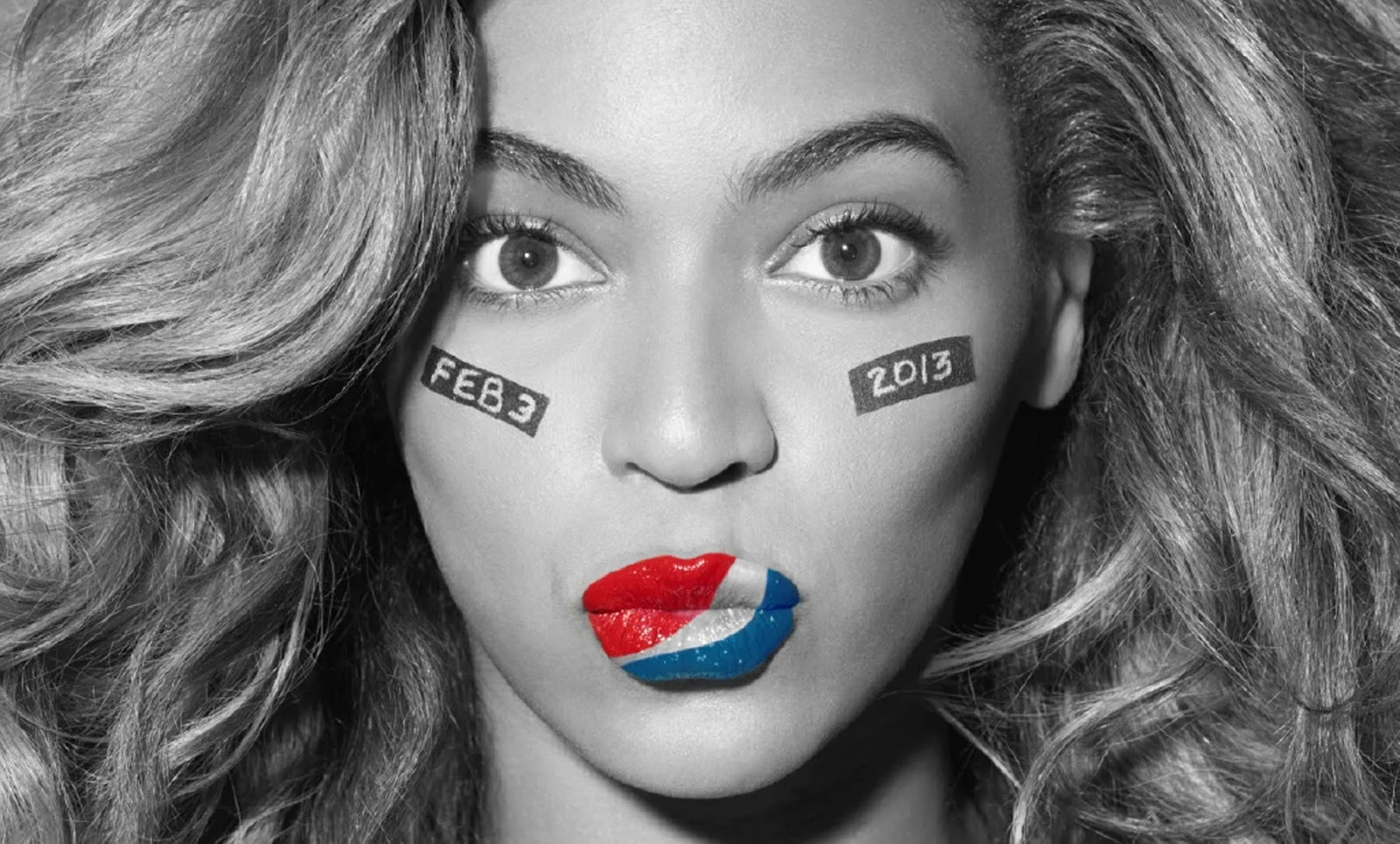
The Best Of Television, 2012: Part One

I tried doing this last year and failed miserably, as I didn’t manage to finish it in the midst of all the end-of-the-year movie reviews I was trying to do, which I also didn’t finish.

Yet another banner year in the world of the Ten-Four Blog.

Still, this is a place where I write when I feel like writing, and so if I start a list at number thirty-two and flame out at about nine, that’s just something we’ll all have to live with.

Where’d I finish in my “Top 100 Albums of All Time” list? I don’t even remember.

In any case, I ranked this list not on quality, but on the enthusiasm with which I looked forward to each episode. The episodes at the top were “drop everything, stay up late, whatever you have to do to see this,” the ones at the bottom were “let ‘em roll up on the DVR and catch ‘em on a lazy Saturday.”

I started a list for this really breaking down my relationship with each show, but my skill set isn’t much suited to that sort of thing. Instead, I’ll just start writing about things I find interesting, then put the final list up after I finish that. Otherwise, I end up so harried by the end that I reject all research and editing, and my reviews begin to look like:

“’Sherlock’ is a British show from a British channel (check on this later) that stars Benedict Cummerbund and Martin Sheen, and features unforgettable performances by guess starts like ______(check IMDB).  There are only a few episodes every season, and the reason is ______ (copy Wikipedia entry). The show is very, very, very well written by Stephen (Steven?) Muffett, who we all remember from his work on “Dr. Who” and ________ (add obscure thing he’s done and a sentence that makes it sound like I’ve seen it). I enjoyed this show very much. Four starts."

Speed is not my strong suit. If I was the lead in “All The President’s Men,” I’d still be hacking away at the Nixon article.

The 12 Albums I Listened To The Most In 2012: Part 2

Welcome back to my list of “The 12 Albums I Listened To The Most In 2012.” You might have been confused by Part One of this list, which talked a good deal about music without ever getting around to covering the twelve albums I listened to the most in 2012. Well, we’re getting to them today.

It took a bit longer to write this section, just because this sort of writing doesn’t come particularly naturally to me. I know that Pitchfork takes a lot of crap (go to Google, type “Pitchfork is”, then just watch what comes up) for the weird, pedantic reviews its members crank out, but its tough to write interesting pieces about music albums. It’s too easy to sound too harsh, it’s even easier to sound cloying, and after you’ve written two or three reviews almost everything sounds the same.

So I consciously tried to avoid that sort of writing as much as possible. I don’t have any idea whether these albums will be listed in the correct order of how much I actually listened to each of them, I only know that the order listed here seems right.

 
12. Of Monsters and Men My Head Is An Animal

If someone had told me that this album sounded like a folkier Stars record, I would’ve bought it the minute it came out.

Recommended
Arcade Fire-esque “King and Lionheart” and brassy jam “Little Talks,” which I was surprised to find is a single. I don’t listen to the radio in Houston, because it’s horrendous, which is another whole discussion. I won’t get into it here.*

*Okay, fine, I will. Maybe I’m spoiled by growing up around Boston radio, but no place I’ve ever spent time has as bad a selection of radio stations as Houston. Houston is the fourth-biggest city in America, yet even when I lived in Kentucky outside of Lexington (the 62nd-largest city in America), I had more options than this.

Look at this list. There are more oldies stations than there are rock and top-40 stations combined. There are ten Gospel stations, seven Tejano stations, 4 Latin/International stations, and one rock station. One. Even if you really like that station (and I don’t particularly), it doesn’t leave you a lot of choices on the dial.

This is why I wasn’t terribly bent out of shape all those times my car radio got stolen.


11. Jack’s Mannequin People and Things

A perfectly solid follow-up, but I don’t think anything Andrew McMahon (formerly of Something Corporate) records will ever match The Glass Passenger, his first record after recovering from life-threatening lymphoblastic cancer. Still, if Passenger confronted his mortality, People and Things is a much looser, exuberant piece of songwriting. I might prefer his darker stuff, but it’s still nice to see McMahon’s recovered enough to have fun again. Cancer seems like a bummer.

Recommended
Cheerful single “My Racing Thoughts,” along with the more anthemic piano-rock aims of “Casting Lines.”


10. Edward Sharpe & The Magnetic Zeros Here

How much do these guys hate The Lumineers? They got here first, and those guys stole all their thunder, and all their commercial money.  Of course, Sharpe’s band is much more playful, and their rootsy, gospel/folk sound feels more earned, if decidedly less accessible. That said, this album’s catchier and more immediate than something this deliberately obscure really has any right to be.

Recommended
Low-key Springsteenesque album opener “Man on Fire,” late-sixties folk jam, “Fiya Wata.”


9. Jake Armerding Jake Armerding

Well, this album is much older than last year – Amerding released it in 2003, I just only started playing it after my dad shipped down his copy. It’s very unusual for me to make music discoveries through my parents at this point – my dad, for example, listens to a combination of sports talk radio and silence in his car, so he’s not normally a person I’d turn to in this regard. But Armerding had played a set at the family camp my parents visit in the summer, and they’d been enamored enough to pick up a CD.

Armerding makes most of his living as a string player behind acts like Josh Ritter and Nickel Creek, so the songs on his own release are elegantly trimmed with orchestration. The album’s got a gentle songwriter vibe to it, with a twinge of both country and folk (boy, there’s that word again), and a literary bent. The album’s opener revolves around the myth of Icarus, while the second track recalls Ithaca – the home of Odysseus, rather than the city in New York. But his songs are rarely cryptic, they’re plaintive rather than esoteric; sad, and full of old memories.

Recommended
The bouncy, harmony-packed opener “Destiny’s Flight” and mournful recollection “You Took Me In.”

8. Andrew Osenga Leonard, the Lonely Astronaut

I’m a sucker for concept albums, and Osenga’s one of my favorite songwriters, so I was in the tank for this one from the get go. Apparently Osenga always wanted to write a whole album about a man who lives in space alone (why not?), and one day got up the gumption to start a Kickstarter so he could build a spaceship inside his recording studio to write and record the album in. Supporters got shirts that said “I Helped Send Andrew Osenga To Space,” and several of them came in to help him construct the Kubrickian-looking room he made the album in.

For a concept album, it’s unusually diverse, with songs connected more by theme than by sound. As the album progresses, it becomes less a story about a man living out in the nothingness, and more about looking back on a life with real uncertainty of whether you’ve lived it the way you were supposed to - with the heavy knowledge that the wisdom you gained does almost nothing for you now.

Recommended
“Brushstroke” builds its story slowly through a thudding acoustic line and a doleful whistle, while “Firstborn Son” transitions gradually from quiet recollection to gravelly rocker.


7. Joe Pug The Great Despiser

I can’t recall exactly how I discovered Joe Pug – it might’ve been Noisetrade, or a local music blog, or just a recommendation off Derek Webb’s Twitter. Either way, I felt intrigued enough to buy the LP right off the bat, which is unusual for me. Usually I dance around the edges of new acts for a long stretch, relying on links to new songs or free downloads of their older albums until I’m invested. However, my iTunes is bare of any Joe Pug music other than this album (though it won’t be for too long), so it looks like I dove right in.

Pug’s a singer-songwriter, slow and steady, with folk and rock and Americana roots (wow, it turns out I really listened to a lot of folk music this year. I had not realized that until just now). While it’s not unheard of for an occasional track to pack in some wailing electric, like the dull howl of the title song, the album mostly tracks in quiet moments. If you’re someone like me (which fortunately you’re not, but still) who becomes entranced by the subtleties on a Damien Jurado or Jakob Dylan or Civil Wars record, the album’s worth checking out.

Recommended
Pug hides a muffled bass line behind a simple acoustic pluck in the Americana-laden “Hymn #76,” before cranking up buzzing guitars on the bitter “Neither Do I Need A Witness.”


6. The Killers Battle Born

I like it when a band is coming back from an album viewed as a disappointment. Sure, sometimes they get concerned they’ve wandered too afield, and their next album is too careful, a cautious apology note. But sometimes the band gets their dander up and comes back out guns blazing. “Oh, you forgot about us? Well, wait until you hear this song! I cranked all the amps up to eleven and then ran them through other amps cranked to eleven and then I spent six days recording the electric parts while submerged underwater and screaming.”  I like a band with some demons on their shoulders.

Brandon Flowers was clearly aware of the blowback from the band’s mildly experimental Day & Age, and Battle Born sounds like a return to form. Which means it sounds like someone went into the desert to record a bunch of Bruce Springsteen songs. Weirdly, I mean that as a huge compliment.

Recommended
The first four songs Battle Born create their own amazing little mini-album. Try those first – particularly the Tom Pettyesque “Runaways.”


5. Matthew Perryman Jones Land of the Living

You’ve heard me shill for this guy on this site before, but this album’s different. Jones gathered the players he wanted for the record and retreated to a remote recording space, with songs but no direction. Ryan Booth shot a short piece out there with the band about the experience that’s worth checking out.  Both Jones and his producer, Cason Cooley (who is coincidentally from Andrew Osenga’s old band, The Normals) were adamant about building the sound around the musicians and the environment.  As Jones notes, it’s built around the idea that “we’re just gonna play, and see what the band comes up with.”

The result is a very unified sound, something assembled from end to end as one consistent piece. It’s been said too many times by people who like to complain about things how digital music has ruined the album experience, which is why I love it when an artist goes to extremes to fight back against the trend.*

*Y’know, as long as its not to the “you have to play these four CDs at the exact same time to experience the album correctly.”

Recommended: The elegiac “O Theo” and the Normals-ish “Waking The Dead” (seriously, those background vocals. It’s eerie).


4. fun. Some Nights

I was on Twitter during the Grammys and, man, do a lot of people hate fun.. I’m not sure if it’s their prevalence on the radio (there aren’t a lot of other pop-rock songs they’re playing these days, I’ve noticed*), or the unfortunate capitalization/punctuation situation with their name, but there’s a real bitterness there.

*The situation in rock is so bad right now that Fall Out Boy reunited and named their album Save Rock and Roll. Yes, America, things are so bad right now that Pete Wentz decided to come and rescue us.

I don’t get it. Fun. is… I don’t want to say it. They’re, y’know, enjoyable. Agreeable. A good time. You know what I mean.

The album’s excellent, and inventive from start to finish, so much so that the best song might actually be the bonus track (“Out On The Town”). It’s packed to the gills with hooks. It’s the sort of bright, fresh pop-rock record that’s both popular and good. Snark all you want, but that doesn’t happen often.

Recommended: The album’s singles (‘We Are Young,” “Some Nights,” “Carry On”) are all pretty indicative of the rest of the album’s contents, but the dancey “All Alone” and the harmony-laden tattoo drumming of “Out On The Town” also stand out.


3. John Mayer Born and Raised

Boy, speaking of things people hate! Mayer really may be a special case. He’s the only artist I can think of whose music has gotten markedly better while people’s opinion of him has correspondingly descended. Well, maybe Chris Brown.

It’s funny to remember what a huge presence on Twitter Mayer was five years ago. He had 4 million followers (a figure that, at the time, really meant something). Then after a disastrous interview where he talked about racism and past relationships in ill-advisedly open terms, Twitter destroyed him (“John Mayer said the n-word!”).  He’s never recovered.

Not that he’s done a great job of rehabbing his image in the meantime (seriously, Hollywood men, if you want people to like you, don’t break up with Taylor Swift. It will not end well).

At least he keeps upping his game as a recording artist. Born and Raised may be his best, an album that proved a long time coming – it was delayed almost a year after Mayer developed growths on his vocal cords, a problem that also forced him to cancel his tour after the growths cropped up again. The time away seems to have done him good. Mayer noted that Born and Raised was “his most honest album,” which for Mayer, is really saying something. “Honesty” never seemed his problem nearly as much as “ego.”  

What sticks out to me is how natural this record sounds. Mayer’s spent his whole career trying on hats – acoustic songwriter, rock singer, blues guitarist, jazz enthusiast – and it’s satisfying to see all of those things mesh together so neatly. Maybe he just stopped trying so hard.

Recommended
The 70’s-era lite rock of “Queen of California,” bluesy jam “Something Like Olivia,” and the Harry Chapin storytelling of “Walt Grace’s Submarine Test, January 1967” (a story told with such expressive detail I Googled “Walt Grace Submarine True Story.” Which is impressive, and also embarrassing for me).


2. David Ramirez Apologies

David Ramirez isn’t like other songwriters. It’s possible he owns a very healthy ego, but he couldn’t be less self-aggrandizing in his songwriting. His own verses seem to hold him in perpetual low esteem, a disheveled mess not much worthy of writing about.  The album’s titled appropriately because Ramirez doesn’t seem to be in good standing with anyone, least of all himself. ‘Apologies are all I have to offer,’ he sighs on “Friends and Family.” ‘I wear them like jewelry, but I ain’t fooling no one.’

Most artists of Ramirez’s type, with his low growl and old country swagger, sound like imitations of realer men, but these songs sound thoroughly authentic. If Ramirez hasn’t gone through each of these moments a thousand times over, then he’s one hell of a liar. For all I know, that might be what he’s apologizing for.

Recommended
“An Introduction” recalls a childhood search for God in churches with a bitter snarl (“it smelled like a hospital, but no one was getting cured.”), while “Stick Around” laments his inability to put down roots.

By the way, the video? Also shot by Ryan Booth. Small world.


1. Tyler Lyle The Golden Age & The Silver Girl

This album actually came out the year before, but I didn’t pick it up until the beginning of last year. Which makes me feel like a bad old friend, since Tyler had lived a few doors down the hall from me in college.

In my defense, I didn’t think of him as a musician at the time. Everyone on the hall had an acoustic guitar (which they all played constantly and at all hours), and I think I only saw Tyler plucking away at his maybe half a dozen times. If you’d asked me to rank the musicians on our hallway, I don’t know if he would’ve made the top 10.

Tyler’s interests seemed more diverse. Our conversations were spotted with philosophical musings and thoughtful, atypical takes on whatever the subject was at hand – from both of us.* He was the only person I could drag with me to see David O. Russell’s I Heart Huckabees, and the only person in the theater besides me who liked it.

*Okay, only from Tyler. I generally contributed nothing.

So when I heard from a friend that they were really enjoying the Tyler Lyle album, it made me sit up straight, because:

    a. I didn’t know Tyler had an album (Tyler and I lost touch several years ago)
    b. The person talking to me had never met Tyler, and had no idea who he was.

Now, there are a couple different standards for albums recorded by people you know.

Level One – Albums so bad that you have to tell your friend, so they can start to get a grip on reality.
This is a horror show. While it’s true that a real friend stabs you in the front, it’s also generally true that you don’t get to keep the friend later, and often you end up getting stabbed yourself. I’ve gotten some very honest feedback about my personality in these moments.

Level Two – Albums you pretend you haven’t heard yet so you don’t have to talk to your friend about them.
Hopefully, they aren’t too aggressive in chasing down your opinion. You can also pretend to have gone deaf, but that’s a very long con indeed, and I’ve never found it to be worth the trouble.

Level Three – Albums you encourage your friends about, because it’s clearly important to them.
Hey, maybe the album’s not great. Maybe it’s pretty lousy. But it looks like they’re having a lot of fun, and that’s what’s important, as long as they’re having fun a good distance away from you.

Level Four – Albums with legitimate good elements to them, where you feel the need to give constructive feedback, hoping to encourage them to better things.
This is a mistake. No one like constructive feedback. Even the “going deaf” strategy is stronger than this one.

Level Five – Albums that are surprisingly good, and you offer lots of compliments, because your expectations were so much lower.
Tread carefully. These people sense the careful way you couch your adulation. “It’s the best song I’ve heard all morning!”

Level Six – Albums so good that you keep complimenting them so your friend knows that you’re not just gassing them up because they’re your friend.
It usually takes six or seven tries before the friend realizes, “hey, this guy honestly really likes my record!” Try not to go past seven, though, because there’s a Single White Female line you’re gonna end up passing at some point.

Level Seven – Albums that become your favorite album, without qualifications.
I’d never reached this level before. But I honestly didn’t put this album at the top of this list because I used to know Tyler. Tyler’s record is good.

It was played on NPR’s “World Café” and recommended on “All Songs Considered.” He had songs that showed up on “Hart of Dixie” and “Private Practice.” It’s not just me.

This was the album I listened to the most this year by a landslide. This was the album I recommended to people the most. This is easily – easily – my favorite album of the year.

Recommended
Lo-fi rocker “The Golden Age and the Silver Girl,” dreamlike ballad “Things Are Better,” and brass-packed reflective howl of “Love Is Not Enough.” Or just download the damn album.

This music video (which picks up as it goes) is also by an old friend of mine from college, Aaron Champion.

My Top Three Action Movies

My buddy Brandon dropped me a line this afternoon, asking for a list of my three favorite action films of all time (along with extensive reasoning for each selection) for a paper he’s writing on… movie criticism or something. He wasn’t specific. It’s very possible the whole thing is a hoax.

I figured if I were to make such a list, I might as well copy it over to a blog post and finagle some use out of it. Especially since it’s a question I’d never covered before on this site. Or even, come to think of it, ever asked myself.

Three's a small number, so I debated the topic for a couple hours before landing on a trio of films I felt good about. Just missing the cut: The Matrix, Star Trek, and Casino Royale all received serious consideration, but I finally decided fell just outside the “Top 3” threshold. I also considered adding Empires Strikes Back or The Fellowship of the Ring, but it didn’t feel right to label either just an “action movie.” The Hurt Locker was considered and rejected for similar reasons, and also because I admire the film much more than I consider it a favorite of mine.

All right, in no particular order.

Gladiator (2000)
Gladiator was the first R-rated movie I snuck into a theater to see. My buddy James and I planned the trip for weeks, huddling together in study halls, whispering excitedly, imagining the spectacle. We met at ten in the morning on the first day of summer vacation, bought tickets to Dinosaur, and with a few cautious glances about, slipped quietly through the door.

Considering my alarmingly lofty expectations for the film, it’s all the more impressive how easily Gladiator cleared them. But the film succeeds on every level – as an action film, a period drama, as a treatise on honor and bravery. 

It’s the film that first introduced me to Ridley Scott. Fans of Ridley’s work are supposed to anoint Alien or Blade Runner his greatest work (a few film snobs will point to The Duelists, but even they know they’re lying), but I think it’s Gladiator. That film is the reason I applied for an internship at Scott’s company the first week I arrived in Los Angeles.

It won five Academy Awards, including the big one, Best Picture, but I put forth that its most impressive win was Russell Crowe for Best Actor. Crowe barely raises his voice above a humble mutter the whole film, but his performance is still so memorable that most people can quote chunks of it verbatim off the tops of their heads (“…father to a murdered son, husband to a murdered wife, and I will have my vengence, in this life or the next.”). Tom Hanks spent a year losing 50 pounds and brought a volleyball to life in Castaway and still couldn’t take the Oscar away from him.

There’s so much I love about the movie – Hans Zimmer’s brassy, thundering score, Joaquim Phoenix's sniveling turn as the usurping Emperor, John Mathieson’s epic, bronze-hued visuals. But the thing that elevates it onto this list is that while most action films consider themselves lucky to have a plot that’s even interesting enough to keep you in your theater seat until the next fight sequence, there’s no piece of Gladiator that isn’t wholly compelling.

Raiders of the Lost Ark (1981)
Some movies age at an incredible rate. Special effects, film stock, stylistic choices – these things change so quickly that films from ten years ago already seem outdated. Heck, The Phantom Menace looked like a TV movie before its sequel was even released.

Raiders of the Lost Ark hasn’t aged a day.

On one hand, it’s easy to credit Harrison Ford for this. The sardonic, knowing way he played Indy, making him the idol of teenage boys the world over. Or Spielberg, for creating a giant action movie entirely on real sets. Even as visual effects improve, nothing compares with real life.

But I think what's lasting about it is just that Raiders is imbued with a sense of adventure rarely found in cinema. Movies don't swash and buckle like they should, when they do, people stand up and take notice. Look at Michael Curtiz's The Adventures of Robin Hood (the one with Errol Flynn and Basil Rathbone). The movie came out eighty years ago, and it's yet to land a single bad review on Rotten Tomatoes.

Adventure - and real adventurers - stand out. It’s one thing to have a hero who daringly runs amidst explosions and gunfire. It’s yet another to have him hunt for golden treasure and ancient mystery in the shadows of old gods with a wry smile on his face.


The Dark Knight
(2008) 
It’s actually a little shocking it took this long to get a Batman film like this on the screen. Filmmakers love to explore the darkness of human souls, and Batman is a character who treasures darkness. Superman can come out in the sunlight because people adore and admire him, but Batman has to keep to the night. In the harsh light of day, the line between hero and vigilante gets much sharper.

For decades, Batman shows and movies embraced campiness because everyone assumed no one wanted to stare too deeply into the blackness of a man who lived his life for only revenge. We like our heroes a little tarnished, but not that tarnished. What Christopher Nolan gave us was something that seems even now unpalatable to modern audiences: a study of the grey line that separates a do-gooder from a madman.

Heath Ledger received so many accolades for the film in part because it’s the role that killed him, but mostly because he made the Joker a character that’s broad, over the top, and totally recognizable. There’s a scene where he kills a man with only a pencil, and yet that’s not part of the film that most makes me shudder. Inside a maelstrom of wicked insanity, there’s a kernel of our own selves, a dim, cracked mirror.

In Batman Begins, Bruce Wayne choose the bat because it’s a symbol, fear in the darkness. In The Dark Knight, he has to choose a darker symbol still: sin. He takes the wrongs of another on his back so that the cause can remain unblemished, so that the city he loves will believe in goodness even if they see only evil in him.

Unsettling symbols like that aren’t found often in movies at all, never mind populist action fare. How is it possible that a movie this dark made a billion dollars at the box office? Maybe moviegoers want truth more than Hollywood suspects. But probably only when it shows up riding a cool motorcycle.

The 10 Things I Hate The Most About The Instagram App

I use Instagram a fair bit. Once upon a time, I used it a lot, though now that the craze has cooled, it’s become less of a fun place to hang out. I don’t enjoy scrolling through my feed the way I used to, and I suddenly realized it had gone past “this program has a couple things that bother me” to “I’m beginning to actively despise this program.”

Facebook spent $1 billion dollars on Instagram just one year ago, and the only thing that’s changed since is that Instagram has joined Facebook in its slow slide to irrelevance.

Yet - like Facebook - it’s still the place everyone is, like a restaurant you hate the food at but end up going back to because that’s where your friends are. Of course, some of those same friends are on Snapchat, but they’re only there for seven seconds at a time. Snapchat is fast food Instagram, with more pictures of poop.

Here are the top 10 things that frustrate me the most about Instagram.


1. It forces me to make all my widescreen pictures square.

Look, Instagram. We just now finally got people away from the 4:3 aspect ratio. We’ve finally all thrown out our CRT televisions. YouTube switched to a widescreen browser. The days of standard definition are behind us, and yet here you are, homesick for a period of time we haven’t totally gotten away from yet.

When I take a picture, my widescreen iPhone uses its entire screen. I frame up the shot and snap the picture.

But when I switch on the app, Instagram asks me which part of the picture I want to crop out.

“None of it, Instagram,” I say, if I were talking to my phone like a crazy person.

“No, you have to crop some of it,” says Instagram, if my psychosis had descended to the point I believed my phone were talking back to me.

“It’s a really well-framed photo,” I protest feebly, my courage quietly flickering out as the machines express their domination over me yet again. “I don’t want to give up any of it. I lose information I want in the frame.”

“Well either, you crop some of it, or you don’t get to post it at all,” Instagram says with a smirk. Defeating me has become such a simple game for it as my spirit weakens.

Soon after, I have a picture that looks like this, and my soul is dead within me.


2. It insists I consider all my options in regards to cropping, filters, blur effect, etc.

Look, I’m awfully specific in what I want to post to Instagram anyway. So I don’t mind spending a minute or two choosing filters and getting my cropping perfect and the whole thing. But for all the times that I don’t want to toss a filter on (and Instagram filters get uncooler by the day), the app doesn’t care.

Do you know how many unnecessary steps Instagram has? Let’s go through it, shall we?

Let’s hit the button to open Instagram.

It’ll go to my “Home” feed first, which is fine. I spend much more time scrolling through other people’s feeds than I do posting my own shots, so this is the right place to send me. But since I want to upload now, I hit the blue “Camera” button in the middle.

 It goes to the camera app, in case I want to take a picture using the Instagram camera, which I most assuredly do not. So I hit the (unmarked) “Photos” button on the corner of the screen,  and it takes me to a list of folders I could pull from – on mine, it has three:

1. My Camera Roll, which has all the photos on my phone
2. My Instagram folder, which has all the photos I already uploaded to Instagram
3. My Photo Stream, which has the last 1,000 photos I’ve taken with my phone.

Assuming I don’t want to keep uploading the same photos to Instagram over and over – which is an assumption I’m happy to have the app make – if it just took me to either my Camera Roll or My Photo Stream (which have nearly identical content) I’d be perfectly happy. But it doesn’t want to rush me. It wants me to stop, think, and wonder if I really should upload the same six pictures I put up yesterday.

Instead, I go to my Camera Roll, which shows me all of my pictures.

I click on the one I want to post, but first it takes me to a screen used just for cropping pictures – even though, as we’ve covered, I don’t really want to. No matter, here we are. I frame up the shot and hit “Crop.”

A spinning wheel appears as algorithms inside the program work to crop my picture, then eventually the app takes me to an “Edit” screen.

What if I don’t want to edit the picture? What if I’m fine with what I shot on the camera? Doesn’t matter. We’re going here anyway.

On this screen, I can muddle over some generic filters for a moment, add a bad blur effect, maybe an ugly frame (I won’t get to pick which one – just whichever one comes with the filter I picked). Or I can hit that button on the right that looks like a drawing of a sun designed for a fascist’s flag. It’ll add a strange contrast/sharpening filter to the whole picture. When I’m finished, I’ll hit “Next.”

Now I can finally share the photo! Look at this screen – it has multiple options on it. If I don’t want to do something, I can skip it without having to go through a million different screens. Why did it take so long to get to this screen?

I type in a caption, choose where besides Instagram I want to send it, and bam –

It takes me back to my “Home” screen, so I can see my picture up there with everyone else’s.

What if I wanted to upload more than one picture, though? Well, it looks like I’m going to have to start the same process all over again – and quickly, too, if I want these pictures to be near each other in people’s feeds. I hit the camera button again…

3. It provides such limited editing options I am forced to download other applications.

I understand this one sounds like I want it both ways – last time I wanted less editing, this time I want more? Let me explain.

What I want as an Instagram user is a streamlined process from photo-taking to uploading. Somewhere along the way – preferably right after I select the photo – I’d like a two-button option: one that says “Edit,” the other that says “Upload.” That way, I can specify if I’m fine with this photo as is, or if I’d like to edit them before they go up.

If I hit edit, I would like to be given a lot more options than I’m given now. Rather than generic filters, maybe I could use pieces of these different filters individually. Add a vignette, or a bluish cast. I could adjust the contrast or the saturation by hand. Maybe even make a frame that holds multiple pictures in it. But that would require Instagram to treat me like an actual content creator who wants control over what I upload.

Instead, I’m forced to download a number of different apps to access those features. I might take the photo in VSCO Cam, edit it with Instaplus, then make a photo with multiple images in Diptic. It’s a long, frustrating process, and after you do it once or twice, you give up because you figure there has to be something better to do with your time.

Sure, I don’t ever really find anything, but the point remains.


I made this picture while waiting for a movie at SXSW
last year. It took me over an hour.


4. A huge chunk of what people post is nonsense.

Here’s the problem: the culture of Instagram has reached a point that people feel the need to post everything. It's a cyclical process. Once you see other people post certain things, you respond by posting the same things yourself, because that's what the space seems to be used for. So bad habits have a way of multiplying.

I pulled some pictures off my Instagram to give an example of this. Keep in mind, these are all real pictures uploaded by people I follow in the last 48 hours*.

*Please, don't be offended if you find your picture here: I'm critiquing the overall Instagram culture - not your specific posts.

There are a number of things on Instagram that come up that I have no interest in every seeing again, yet every day, there's more of them. For example: Food you made.

Or, something you're about to drink.

And what you're going to drink it in.

Or the fast-food restaurant you're eating at.

Or the music you're listening to.

Or things you're thinking about buying.

Or the post you find so inspirational.

Or the fact that your pets are near you.

Even if they aren't doing anything.

Or what's directly in front of you.

No matter how uninteresting it is.

And please, no more downloade pictures of the celebrity you find attractive.

Not even on #mancrushmonday

And even if we can't get rid of all of that - can we at least try and get rid of this?

Stop encouraging this, people. Please. They’ll stop doing it if we stop encouraging it.


5. There’s no way to make lists (and it caps you at 200 follows).

Look, there are people who are your friends who you’re going to follow on Instagram. Many of them are going to say to you, “hey, did you see my picture on Instagram?” from time to time, and at least some of that time, you need to be able to say “yes.” So I keep following a lot of people who post constantly, even if most of what they post is excruciatingly dull.

But look: I can make lists on Facebook. I can make lists on Twitter. In most avenues of social networking, I can control my own experience. Why not here?

If I wanted to divide my feed up by interests (“Friends,” “Photographers,” “Celebrities,” “Constant Posters,” etc.), I’m out of luck. I get one feed, and if I’ve got six or seven friends who clog it with nonsense all the time, then those are the only friends whose pictures I’m going to see.


6. Finding your friends is a massive pain, finding someone who isn’t your friend is almost impossible.

This has gotten much better – it used to be the only way to find someone was to ask them their username, memorize it (“okay, so wiltj237r, I’ll definitely remember that when I look at my phone again”), then search for it later. Get the username a little wrong? Looks like you’re going to have to text them and ask them again.

It was worse if you wanted to follow a celebrity – you had to have come across the tweet where they gave out their Instagram handle (if they did) to enter it into Instagram and find them.

Now, the search features are better – they at least understand that you’re looking for a person, even if it probably can’t find them – and Instagram has feature that tells you which of your Facebook friends have connected Instagrams (though it identifies them by Instagram name, so it may be hard to figure who "xXxcrazyheartxXx" really is).

For some reason, that last section is under “Instagram Settings” rather than “Explore.” But of course, when it comes to Instagram, nothing’s intuitive.

Compare that to Twitter, or Facebook, both of which constantly have a sidebar up showing me people they think I should befriend/be following, based on my preferences. Instagram has no idea what my preferences are, and they’d have no concept of how to send me recommendations even if they did.


7. Speaking of, the “Explore” feature is basically useless.

This section shows a collection of pictures that are popular right now. I don’t know if these pictures are selected, or just collected by algorithm. It doesn’t matter. They’re always horrible.

This would be a great place to see interesting pictures, shot by interesting people, but that’s not what it is. It’s just pictures that are getting a lot of “likes.” Which means that on an average day, the section looks like this:

  • A celebrity’s picture of their view of the pool on their vacation.
  • A celebrity’s picture of the outfit they’re going to wear at an award show or interview.
  • A picture of food from a food website, with the recipe printed illegibly in the corner
  • Three pictures of members of One Direction, copied from the web and uploaded by fan accounts.
  • A picture of sneakers, uploaded by a shoe website.
  • Four “inspirational” phrases, either on top of a stock photo of a girl in a ballerina costume, or just on blank background.
  • A stock photo of a kitten.

Of course, that’s not the only problem with the “Explore” section. The other is:


8. There’s no way to tell who the popular users are.

The “Explore” feature shows you popular photos, but not the popular users. And it doesn’t let you, you know, explore. If I wanted to find world class photographers who are uploading their work on Instagram, I could probably find that – but only if I did a web search for such a list, memorized their Instagram names, then returned to the app to search for them.  There’s no other way.

Would it be so hard to create categories? I could see what celebrities have the most followers, which photographers are commented on the most.

Or even if I couldn’t have that – why can’t I repost someone else’s work? I can re-tweet someone to all my followers, I can share something I found on Facebook. If I’m following someone who has an awesome picture, why can’t I let my followers see it, too?

Allowing the user to promote other people’s content encourages good content. Tons of people are following Ryan Gosling on Instagram, because he’s Ryan Gosling, famous handsome charming person. Celebrities will have followers on every platform, regardless of what they post (note: I do not know if Ryan Gosling's Instagram feed is good or not. He's just an example. Don't kill me, Baby Goose fans).

But good social media allows users to create celebrities within the narrow bounds of that site’s culture. People who use Twitter or Reddit well develop followings (heck, some of them end up with TV shows). It would be basically impossible for that to happen on Instagram.

9. The “photo map” feature doesn’t let you tag your photos where you took them, only where you are when you post them.

Sorry if you waited until you got home to post the pictures you took on top of Mt. Everest, but the app tells me that all these pictures were taken at the Newark Airport during a layover.

10. Facebook won’t allow it to work with Twitter anymore.

Instagram used to work perfectly with Twitter – you posted a picture to Twitter, and when someone clicked on your tweet, the picture would pop up right below the text. It still does it if you upload the picture directly to Twitter.


But if you post something to Twitter through Instagram, only the link appears. The user has to be intrigued enough by your caption that they click on the link, because they know doing so will route them away from Twitter to a webpage.


So, why doesn’t it work with Twitter anymore? Mind-bogglingly small-minded thinking.

Facebook purchased Instagram because it was such a dominant app. But they didn’t like the fact that it blended so perfectly with Twitter that users were constantly sending their pictures there. So they made it less fun to do that, hoping you’d decide to only send your pictures to Facebook instead.

Think about that for a second. If Instagram was such a valuable commodity that Facebook was willing to spend a billion dollars to acquire it, why would they want to undercut an aspect of it that made it so popular? Do they really think that people’s response to that will be “well, I guess I’ll use Twitter less!” as opposed to “well, I guess I’ll find another app that uploads pictures to Twitter!”

Here’s an analogy for you. Let’s say that McDonald’s bought Coca-Cola. And after a short period of time, they said, “all these people are drinking Coke, but not in our restaurant! We need to make it so that if you want Coke, you have to come to McDonald’s.” So they change Coke’s distribution so that you can only buy it in McDonald’s.

“Coke is the most popular soda in the world,” McDonald’s says. “People will do anything to have it. What are you going to do if it becomes inconvenient to get it. Drink Pepsi?

Well, yes. That’s what people will do. They’ll drink Pepsi, even if they don’t like it as much as Coke. Or they’ll drink the brand new soda that came out that tastes a lot like Coke and is willing to distribute their soda to wherever people are.

Be careful, Instagram. No one has ever gotten rich by holding the customers’ loyalty of their heads.
These Super Bowl Commercials Give Me More Questions Than Answers

These Super Bowl Commercials Give Me More Questions Than Answers

Well, the Super Bowl has come and gone again, and the next morning dawns with its big question: "who had the best Super Bowl commercial last night?"

Lots of blogs do a "Best Super Bowl Commercial" list, but those lists mostly make me feel like I'm the only person in the world who doesn't think that average-looking guys using beer to fool beautiful women into sleeping with them is always funny. Well, me and Jezebel.