The Best of Television, 2012: Part 6: My 20 Favorite Shows of 2012

I tried to rank all these by my level of excitement to watch each show, not just my overall opinion of each show's quality. For example, "Mad Men" might have just finished its greatest season, but I didn't look forward to each episode the way I did with "Community."

Just missing the cut: "30 For 30", "Veep", and "Parenthood."

20.  Bent (NBC)

19.  The League (FX)

18.  Bob’s Burgers (FOX)

17.  Battleground (Hulu)

16.  The Good Wife (CBS)

15.  Archer (FX)

14.  Happy Endings (ABC)

13.  The Daily Show With Jon Stewart (Comedy Central)

12.  Louie (FX)

11.  Key and Peele (Comedy Central)

10.  Girls (HBO)

9.    Awake (NBC)

8. 30 Rock (NBC)

7. Downton Abbey (PBS)

6. Parks and Recreation (NBC)

5. Mad Men (AMC)

4. New Girl (FOX)

3. Community (NBC)

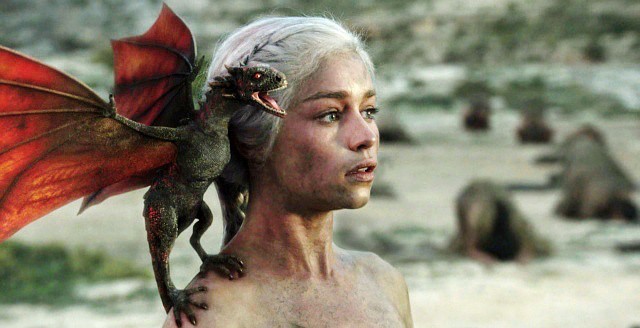
2. Game of Thrones (HBO)

1. Sherlock (BBC)


The Best of Television, 2012: Part 5: - Sometimes Shows Get Worse

I’ll post my Top Twenty television shows immediately after this entry, but I noticed a theme as I was putting the list together, and couldn’t help but point it out. It seems three of my top ten shows, including both of the top two, are:

a. had their second season in 2012

b. were inarguably worse shows than they were the year before.

“Sherlock”, “Game Of Thrones”, and “Downton Abbey” all returned last year to great fanfare. Sometimes it takes a little while for these sorts of shows to catch on, but word had spread, DVDs were passed about, and Netflix accounts and free HBO trials were taken advantage of. Each of these shows had a significantly bump in viewers for their second season premieres than they’d had for their first season finales. And each show found themselves facing real backlash before they’d even reached midseason.

The degree in variance among the three shows ranged from “slightly disappointing” to “significantly worse.” BBC’s “Sherlock” was only mildly damaged, with two just-below-standard episodes whose weaknesses were forgotten by the time an appropriately nail-biting finale rolled.

“Game Of Thrones” was more deeply wounded, though much of that was to be expected. It had been lauded for its brave decision to follow the arcs of the novels it was based on and execute its main character at the end of Season One. TV writers were orgasmic. “It just shows you that anything can happen!” And, anything could; including the show predictably struggling to find cohesion without a central figure to hold things together. The show became so disjointed that entire weeks would pass by without us knowing what several of the major characters were up to, which is a rough strategy for a show built around a giant, interconnected narrative.

Still, faithfulness to a much-adored novel is a weakness I can easily forgive. Much more galling were the decisions Julian Fellowes made on “Downton Abbey.” Television pundits were shocked when people started showing up in droves to watch this decidedly sudsy turn-of-the-century drama (the show is up to a very un-PBS eleven million viewers per episode, almost three times what NBC is doing at the same time, and was the second-highest watched show on Super Bowl Sunday), which pretends to be about class struggle and social politics but is mostly about people in period costumes having unrequited romances. The class struggles and social politics only come into play if they can create roadblocks to those romances, so that the characters can stare longingly at each other at formal family dinners.

So what did Fellowes do in his second season? Crank the soap opera elements up so high the feathery charms of the series collapsed under the weight of desperate plot machinations. Matthew has disappeared! No, now he’s returned! Now he’s gone again! Now he’s paralyzed! He’ll never walk again – until two episodes from now! Just in time for his fiancé to die! Just down the hall from where that other servant died last episode! But there’s no time to focus on that! A soldier with a burned face has appeared from nowhere! And he has amnesia! Is he someone from Edith’s past? Who knows? He’ll disappear at the end of the episode so that some other pile of nonsense can happen!

I didn’t make any of that up.

I mean, viewers understood that this show was all nonsense, a sugary concoction that had little tie to the era it was recalling. The mistake is to not let the audience pretend they don’t realize this, and letting amnesiac burn victims wander in and out of plotlines does tend to spoil the effect. 

So why are all three shows in the top ten? Who knows? I guess I’m as fickle as the breeze.

Or maybe it’s that while the shows took a hit, they didn’t lose whatever quality it was I loved most about them. Or all three shows were so good that they could stand to take a quality hit. Or I just really like British actors. I’m not sure.

I guess it doesn’t really matter. I’ve had lots of shows that I’ve battled with decisions that they’ve made or directions that they’ve taken. Doesn’t bother me.

The problem is when I stop caring.

The Best of Television, 2012: Part 4: - The Trouble With Television (A Counterpoint)

There are people who love a good “comments” section (sick, depraved people, the way I see it). I’m not one of them. Not on any terms. Not in a well-run discussion forum. Not the “abandon all hope, those who read below” bit underneath YouTube videos. Not even the “fun to read for the insanity of it” of a Reddit thread gone awry.

It’s not even the people loudly shouting their opinions in all caps. It’s the people who work terrifically hard to create a quasi-intellectual response to the article or subject.* These are people who consider themselves significantly superior to the people typing in all caps, but when you read the comments, you realize they see things in terms just as black-and-white. Their comments are no more open-minded than those banging angrily away at their keyboards (people writing in all caps may be typing normally, but reading it always sounds like they’re just slamming their fists up and down on their laptop).

*It’s the same level of self-absorption as getting a blog (which will be referred to from this point forward as the correct level of self-absorption), but then deciding “it’s not enough for my opinions to be available. I must take my brilliance to the people.”

Take television. The vast majority of people who talk about this subject online see it as a massive divide: there is brilliant, smart television (“Breaking Bad”, “Mad Men”, “Arrested Development”) and there is dumb television made for idiots (“Two and a Half Men”, “Big Bang Theory,” “Here Comes Honey Boo Boo”). And the tragedy of our age is that everyone wants to watch the latter, and no one wants to watch the former, and so our society swirls down the drain.

That’s nonsense. Television exists on a very narrow spectrum. As much as television has improved as an art form in the past thirty years (and the divide between “Mad Men” and “My Mother The Car” is quite remarkable), it’s still the same thing. It’s still generic stories, run through executives and past corporate sponsors, filmed in a rush, then delivered to you in weekly doses interrupted by advertisements. Television, as a medium, has changed drastically only by the measure in which television can change without no longer being itself.

I know this is starting to sound a little bit sophomore-in-college Intro To Media Studies paper (“Sheep! You are all sheep! Things would be so much better if I was in charge!”) But when we talk about television, it usually sounds like we think the gap between “Two and a Half Men” and “30 Rock” is the gap between the Piss-Christ and the Mona Lisa, when deep down we know it’s really the gap between McDonald’s and Chick-Fil-A.*

*I should be clear that I am speaking only in terms of “quality of chicken products,” not “ideological sentiments.”

Television is fast food, and it’s bad for us, and we know this. But we make the point that “Mad Men” is ‘perhaps the greatest television drama ever created. So it becomes “appointment television,” because you have to make a commitment to quality art. “Community” is ‘the funniest show no one’s watching.” “Scandal” is ‘trashy television done brilliantly.’ Even “The Bachelor” is ‘a reflection of our society’s appetites and obsessions.”  Our entertainment becomes more than a flickering black box that fills up our evening hours, it becomes cultural literacy, because addiction is always justifiable if you squint at it long enough.

Alex Pappademas did a mesmerizing piece last week on fired “Community” creator Dan Harmon, who is referred to as a “genius” in almost every article written about him (unless they refer to him as a “tortured genius”), including that one. And Harmon goes on a tirade at some point about this very subject. “That there's a difference between any of this s--- is the greatest joke that television ever told,” he says. “I mean, as the creator of ‘Community’, I'm telling you: It's all garbage.”

He’s not wrong. The difference between the best television and the worst television we’re ever going to see is a small divide, created only by our inability to look elsewhere for comparison.

Of course, I’m still going to watch all of it. I may be past the point of pretention about all of it, but I’ll still watch TV shows because I like TV shows, and I always have. I could spend my time learning the history of fresco painting, or how to create my own subsistence farm, or military naval maneuvers, but I don’t want to, and I don’t see the need to pretend that I ever would.

Television grows in importance in our society, but it’ll never reach the point where it’s actually important, and I don’t really care. I don’t need to gild something to make myself feel better about it. Being reminded that somewhere out there, chefs are preparing lobster bisque doesn’t make me love fried chicken sandwiches any less.

The Best of Television, 2012: Part 3 - When Shows Make The Leap

I always say (to whomever is listening, whether they care or not) that when new comedies premiere, you don’t start watching for what the show is, you start watching for what the show will become. Most comedies need a full season to get their sea legs, as writers learn to write for their actors’ strengths, and the actors learn how to wring jokes out of their characters' quirks. Shows like “Parks and Recreation,” “Community,” even “Girls”*… they aren’t nearly the same shows they were when they premiered, and that’s usually a good thing.

*All three of these are separate cases. "Parks and Rec" started out as an "Office" spin-off, but it wasn't working and no one on the show was likable, particularly Amy Poehler's Leslie Knope as the oblivious Michael Scotty-type lead. The showrunners adjusted, changed Leslie Knope into a likable overachiever, and suddenly the show was about a bunch of nice people who had this easy workplace chemistry. It's unrecognizable as the show it was when it premiered.

"Community" seemed to start out as just another bland single-cam sitcom with a good cast, but developed into something referential and insane and occasionally brilliant and deeply uncommercial. In Season Three, it retreated a little too far into its own headspace, and creator Dan Harmon was fired as showrunner. Since showrunners are fired all the time, I was hoping that the effects of Harmon's firing would be overblown, and that the cast remaining would be enough to keep the lights on.

But, judging by the first results of Season Four, it seems that everything that made the show stand out has disappeared abruptly. It's a shame. That used to be my favorite show, and now it's a chore to watch it, especially since I know how much potential the show actually has.

As for "Girls," it seems we're still learning exactly what the show is as it goes, but it's deepened itself nicely as it hass expanded. Even on pay-cable, it's surprising to see a sitcom that makes character choices this subtle.

When a new comedy premieres, I’ll check out the pilot and an episode or two afterwards, to see what the potential of the show is. Sometimes I’ll enjoy the show enough to say “I’ll stick with this to see where it ends up.” Sometimes I’ll get a sense of the cast’s chemistry, feel it has promise but isn’t worth watching yet, and decide to check back in later.* And sometimes I’ll take one look and say “Nope. Never again.”

*This year, I thought both “Ben + Kate” and “The Mindy Project” were worth looking at again at the end of the year to see how they were coming along. I checked back at Christmas, but wasn’t much impressed with the change – both shows seem to be wasting a lot of actors I enjoy, like Chris Messina and Dakota Johnson. Though now that "Ben + Kate" is officially cancelled, I guess those guys are free to do other things.

With “The League,” it was the latter. But I received so many recommendations to pick the show back up that I found I couldn’t ignore it anymore.  And when I finally watched another episode, I found a loose, bawdy, improvisational show completely different show from the one I’d left. The show had made the leap.

It’s this leap forward I’m referring to whenever I start getting animated about why people should watch “New Girl.” Whenever people ask me what I’m watching, that’s the first show I talk about, because it’s a show that's made the leap and hardly anyone noticed. Everyone sees the show’s original conceit (awkward hot girl moves in and baffles the three normal guys living in her apartment) and its star (professional awkward hot girl Zooey Deschanel) and assumes it’s going to be girly, faux-hipster unfunniness.

But instead, sometime last spring (specifically, the two-parter "Fancyman," if you're looking to check this out), it made the leap, and this was already a pretty good show to start with. If you haven't been following TV much lately, this will sound crazy but: it’s the best sitcom on TV.

Don't believe me? I’m not the only one who thinks so.


The Best of Television, 2012: Part 2 - The Joy of Cancellation

By the time I started watching “Bent”, the show had already been officially cancelled. NBC blew threw all six episodes they’d made in three weeks, then announced that the show wouldn’t be returning. I was not shocked to hear the news, the promotion for the show had been spotty and mostly dismal, and the ratings had been correspondingly tepid.

They had their work cut out for them on this one, anyway. With a show like “Bent,” you had to sit through a few minutes to catch on to the loose, conversational rhythm of the show. But TV promotions need to be about 10 seconds long (because that’s the only way they know how to market shows), so in every ad, NBC’s marketing department would just pick a quick clip of dialogue that sounded vaguely similar to a standard set up/joke delivery, and then trot that out during commercial breaks. It’s not particularly surprising the strategy didn’t work, and “Bent” disappeared before most people noticed it had ever been.

Most of the shows I watch seem perpetually on the verge of cancellation. Every week, it’s a rallying cry on Twitter, begging for “first-watch eyeballs” (that is, non-DVRed viewing) on the latest “Community” or “Bob’s Burgers.” “Parks and Recreation” is only alive because NBC has nothing else in the tank to replace it. Some are anointing “Happy Endings” the funniest show on TV, just in time for it to likely disappear at the end of the year. “30 Rock” was, at its peak, the 62nd most watched show on television, and it signed off two weeks ago with one of the characters shouting, “that’s our show! Not a lot of people watched, but joke’s on you, because we got paid anyway!”

I’ve taken part in the begging myself. I’ve submitted a few “watch this, please!” tweets in regards to all the shows above, and I pushed for people to watch “Awake” so it wouldn’t be cancelled (neither of those things happened, sadly). I even feel kinship for campaigns to save shows I don’t particularly enjoy, like the fans who clung to “Don’t Trust the B in Apartment 23” until the day it died – though mostly, I feel relieved that I don’t feel attached enough to the show to have to summon the energy to get up in arms about it.

A lot of people harp against the unfairness of it all, but I’ve come to feel the other way about it. It might be unpopular to say, but I kind of…. love following shows that could leave me at any moment.

Television is a static medium. That’s part of the appeal. We meet and fall in love with characters, and every week they return to us.

The trouble is, there’s nowhere else for that relationship to go. The show may get better for a time, and we will grow to love it more, but eventually, inevitably, it will get worse. The experience of watching it will become a chore. The network might take it off the air, or we might give up on it, but the unshakable fact of the matter is that either they will leave us, or we will leave them.

The news that “How I Met Your Mother” had been renewed for a new season would once have filled me with gladness, but now it only brings a hollow dread. As each of the last few seasons has progressed, everything I loved about the show has slowly drained away, until now I find myself unable to root for any of the characters. Each episode only damages the goodwill I have towards the show, and a new season – which I will helplessly watch at least some of – will only damage my relationship with the show more.

Compare that to the early, heady days, when the show was constantly on the brink of cancellation, and only a few CBS execs who liked the show kept it hanging around in hopes of it finally finding an audience. That was a young, alive show, something that looked utterly distinct from this plodding thing that doesn’t know what it wants to be anymore.

Shows that realize that any moment the guillotine could fall are different from their steadier counterparts. The pace is faster, the jokes packed tighter, the showrunners take more chances. I remember someone on a DVD commentary (I think it was Joss Whedon talking about “Firefly,” but who knows) saying that the threat of cancellation is bad for your health, bad for your sleep pattern, bad for your family life, bad for your marriage – but good for your show.

A show like “Modern Family” doesn’t have that attitude. It’s a massive hit, ABC counts on them to anchor a Wednesday night full of unproven comedies, and so everything they do seems safe, predictable. I saw about half-a-dozen episodes of the show this year. They were the exact same as the episodes I watched last year.

I once loved the show, but now there’s no reason to get excited when it airs, because I know there’s nothing I’ll watch that’s any different from anything I’ve seen before.

Of course, part of that may just be me. Knowing I can click away from the show and come back a few weeks later, and the show will still be there… that’s part of what a lot of people like about TV. Television is a dependable bedrock, sending you the same content every week, never messing up something you love. That’s a harder thing to do than I often admit, and it’s not like “NCIS” would be a better or more daring show if they only made ten episodes a season, anyway. It’s steady as a train, and it always arrives at the same station. One day it will be gone, but only when it has outlived its usefulness, and not before.

But a show like “Parks and Recreation,” where at any moment the powers at be can just say, “well, that’s enough of that,” and it’s abruptly gone from my life – it makes me appreciate the show that I’m watching while I’m watching it. Because I know that it’s going to leave me long before I want to leave it.